

From a business perspective, the risk posed by conflicts between concession operators and local populations in emerging or frontier markets concerns more than just companies…
This brief calculates the cost of securing Indigenous Peoples’ and community rights to the tropical forests where they live, noting that secure land tenure is a prerequisite for the success of climate, poverty reduction and ecosystem conservation initiatives.
Forests and their role in reducing global carbon emissions will get their time in the limelight at next week’s U.N. Climate Summit in New York,…
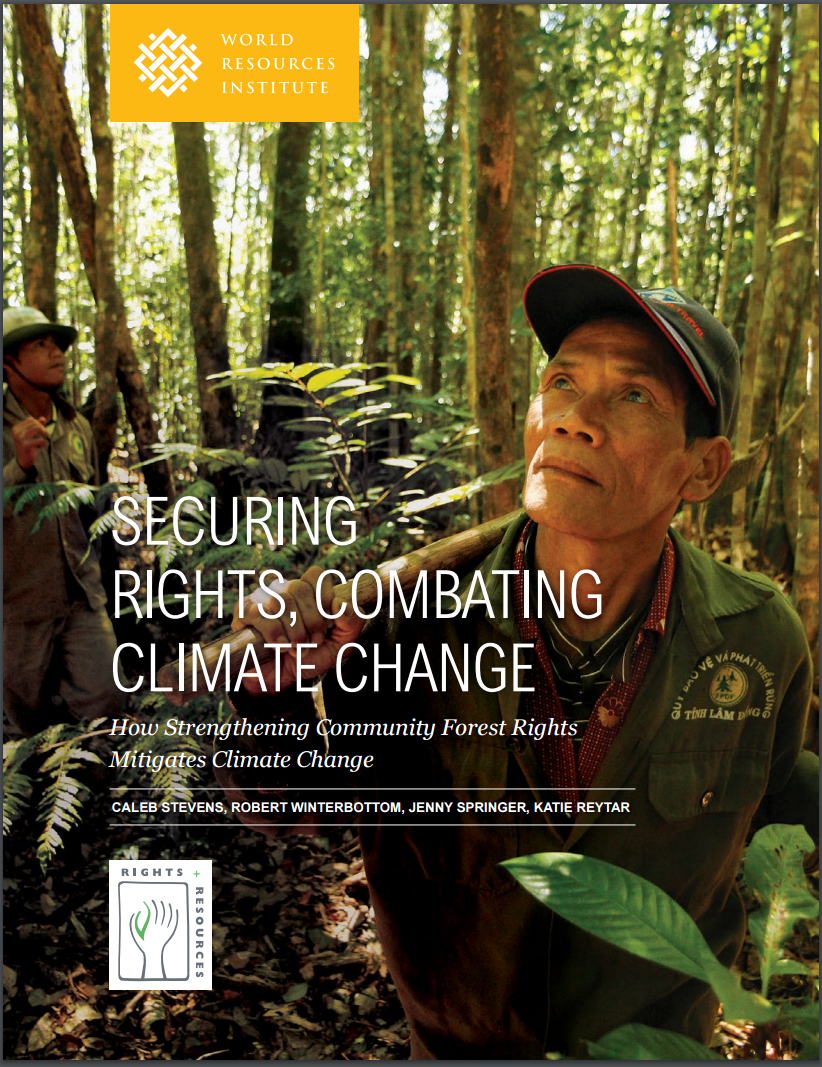
An analysis of the growing body of evidence linking community forest rights with healthier forests and lower carbon dioxide (CO2) emissions from deforestation and forest degradation.
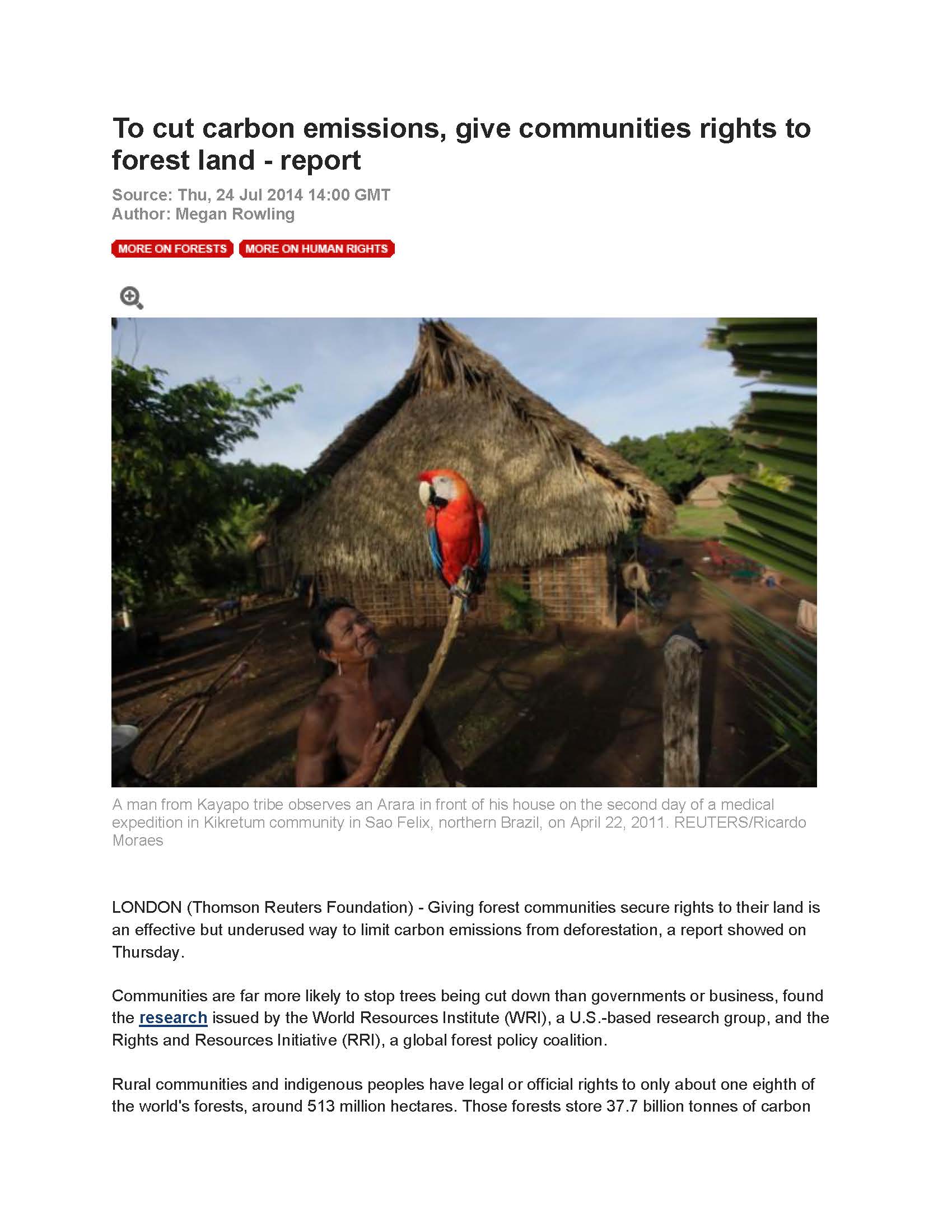
Giving forest communities secure rights to their land is an effective but underused way to limit carbon emissions from deforestation, a report showed on Thursday….

De segunda a sábado, Miguel Ramírez, de 58 anos, acorda às 6h30m e vai para o campo como dezenas de outros moradores de Capulálpam de…
While governments are increasingly recognizing local ownership and control of forests, forest tenure arrangements remain in dispute or unclear in many places, including low, middle, and high income countries.


While there were many encouraging pronouncements in 2013—from courts, governments, and some of the world’s largest corporations —unfortunately, progress for community land rights on the ground remains very limited.

It is widely understood that forests throughout the world are under growing pressure as societal demands increase and diversify. If the drivers for this pressure…

In order to strengthen collective efforts to address these challenges and capitalize on current opportunities to scale up community land rights around the world, from…
A legal analysis of the national legislation assessing whether these legal systems recognize the community rights to access, withdraw, manage, exclude and alienate to forest resources and land.

Despite more understanding, resources, and policy recommendations, women continue to be largely marginalized and ignored or exploited in community based resource management processes throughout Asia.

At first glance, the reforms seem to be making great strides towards achieving poverty reduction and improving livelihoods, and, indeed, they generally succeed in protecting…
This paper draws on existing literature to explore the gendered elements of community-based forest enterprises (CFEs), focusing specifically on the role of women. It identifies…
An interview with the chairwoman of The Federation of Community Forestry Users, Nepal (FECOFUN), a formal network of Community Based Forest User Groups from all…
A 2011 interview with Cécile Ndjebet, founder and president of REFACOF.

This chapter aims to demonstrate the strong connection between gender-sensitive forest tenure reforms and improved livelihood indicators, forest conservation, and overall gender equity in South…

This chapter is based on the authors’ recent study for USAID on gender and REDD+ in the Asia region. The study aims at identifying and…

This report presents a body of new evidence on the opportunities for a more diverse and equitable forest economy which balances conservation, timber and wood-based…

This essay identifies, summarizes, and analyzes leading international and national laws and judicial cases recognizing or otherwise supportive of native/aboriginal title.

Like all forest enterprises” community forestry enterprises (CFEs) have a mixed record” with numerous cases of successes as well as failures. As the experience in…
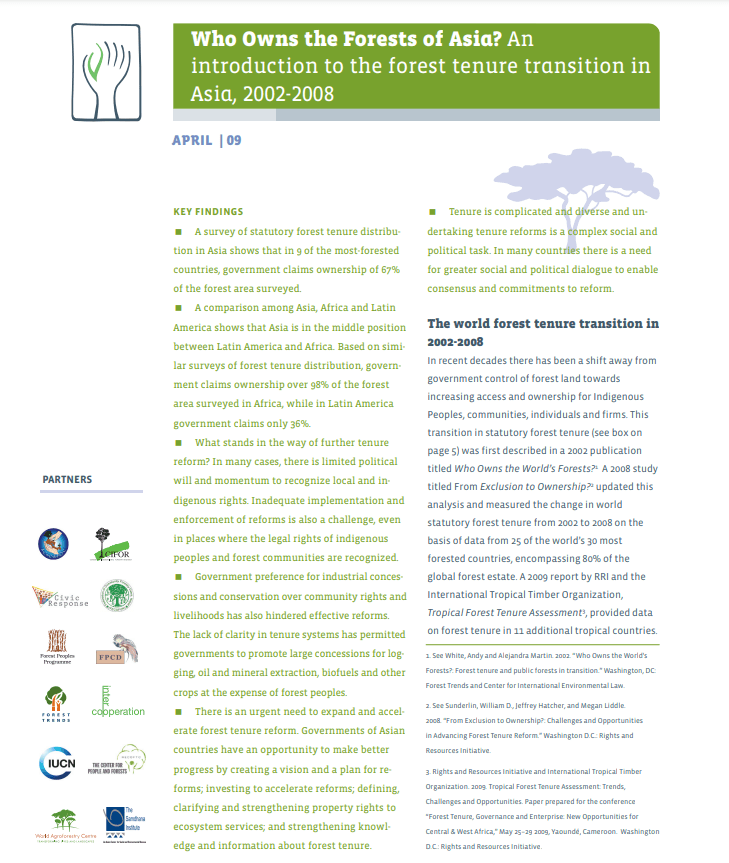
In recent decades there has been a shift away from government control of forest land towards increasing access and ownership for indigenous groups, communities, individuals, and firms. This brief highlights this transition in statutory forest tenure from 2002-2008 in Asia. The brief focuses on forest land tenure, but tenure over other forest resources (timber, non-timber forest products, carbon, sub-soil mineral ores, etc.) is often just as important. Moreover, although the focus is only on tenure in this analysis, the regulatory framework is also critically important because it specifies the rules regarding land use and who gets access to what resources.

The present Ghana context study is part of a larger body of research on alternative tenure and enterprise models (ATEMs) for Central and West Africa…